

• About
    • Mission / Vision Statement
    • Governance / Board of Directors
    • Board Meeting Packages
    • Area of Jurisdiction
    • Publications/Forms
    • Events
    • Tender Documents
    • Employment Opportunities
    • Accessibility
    • News & Blog
    • SCRCA Staff Directory
    • Service Disruptions
    • Contact Us
  • Permits & Planning
    • Introduction
    • Property Inquiry
    • Map Your Property
    • Regulations Permits
    • Drainage Act Project Review
    • Plan Input and Review
    • Policies and Guidelines
    • Fee Schedule
  • Water Management
    • Flood Notices
    • Flood Notice Types
    • W. Darcy McKeough Floodway
    • Low Water Response
    • Riverbank & Shoreline Protection Development
    • Erosion Control Projects
    • Great Lakes and Connecting Channels
  • Watershed Services
    • Tree Planting / Woodlot Services
    • Environmental Monitoring
    • Habitat Restoration Projects
    • Grants for Landowners
    • Invasive Species
  • Conservation Lands
  • Education
  • Foundation
    • About the SCRCF
    • Donate to our Foundation
    • Planned Giving
    • Memorial Forests
    • Sponsors
    • Land Donations
    • Scholarships
    • Green Meetings
  • Contact Us
St. Clair Region Conservation AuthoritySt. Clair Region Conservation Authority
Flood Status NORMALLow Water Status Level 1
  • About
    • Mission / Vision Statement
    • Governance / Board of Directors
    • Board Meeting Packages
    • Area of Jurisdiction
    • Publications/Forms
    • Events
    • Tender Documents
    • Employment Opportunities
    • Accessibility
    • News & Blog
    • SCRCA Staff Directory
    • Service Disruptions
    • Contact Us
  • Permits & Planning
    • Introduction
    • Property Inquiry
    • Map Your Property
    • Regulations Permits
    • Drainage Act Project Review
    • Plan Input and Review
    • Policies and Guidelines
    • Fee Schedule
  • Water Management
    • Flood Notices
    • Flood Notice Types
    • W. Darcy McKeough Floodway
    • Low Water Response
    • Riverbank & Shoreline Protection Development
    • Erosion Control Projects
    • Great Lakes and Connecting Channels
  • Watershed Services
    • Tree Planting / Woodlot Services
    • Environmental Monitoring
    • Habitat Restoration Projects
    • Grants for Landowners
    • Invasive Species
  • Conservation Lands
  • Education
  • Foundation
    • About the SCRCF
    • Donate to our Foundation
    • Planned Giving
    • Memorial Forests
    • Sponsors
    • Land Donations
    • Scholarships
    • Green Meetings
  • Contact Us

St. Clair Region Conservation Authority Continues Tree Planting Tradition

St. Clair Region Conservation Authority Continues Tree Planting Tradition

January 21, 2022

The St. Clair Region Conservation Authority (SCRCA) continues to operate its annual tree planting program in 2022 and is currently accepting tree orders for the upcoming planting season. Since 1980, the Authority has assisted rural landowners with ordering trees, tree planting services, and controlling weed competition around newly planted trees.

In the beginning, the SCRCA’s tree planting program focused on restoring forests and habitat on their newly established Conservation Areas with the majority of plantings completed by local volunteers and community groups such as Scouts Canada. There was a provincial tree nursery in St. Williams, Ontario that supplied Conservation Authorities and rural landowners throughout southwestern Ontario with high-quality tree seedlings for a nominal fee. This resulted in landowners and conservation groups planting millions of trees each year, adding much-needed farm windbreaks and green cover to marginal lands in southern Ontario. In 2021, the SCRCA celebrated its 60th anniversary with a small event on National Tree Day to celebrate a significant milestone – the planting of 4 million trees throughout the St. Clair Region watershed.

Tree planting at the SCRCA continues today with the help of several private tree nurseries that specialize in seedling stock trees.

“The tree seedlings produced today are much hardier seedling stock compared to 20 years ago,” said Steve Shaw, Manager of Conservation Services at the SCRCA, “All of our coniferous (evergreen) trees are produced and sold as transplanted seedlings that will tolerate many of the harsh site conditions and extreme weather we experience today. Landowners are also getting a thicker caliper tree with a more developed root system which provides a higher survival rate than before.” There are also numerous deciduous (broad-leaved) tree species grown from seeds collected from native trees in the St. Clair Region every fall.

The SCRCA has approximately 10% forest cover on average throughout its watershed. According to Environment and Climate Change Canada, that figure is too low to sustain the health of a watershed. The SCRCA plants approximately 60,000 trees each year in addition to the thousands of trees ordered by landowners who purchase and plant trees on their own. Conservation Authorities also have access to several federal and provincial grant programs to assist landowners who are interested in having the Conservation Authority plant windbreaks to prevent soil loss and improve crop yields, establish buffer strips to protect watercourses, and establish tree plantations to create habitat in marginal areas.  “These financial incentives make tree planting projects very affordable for landowners,” said Shaw.

“Over the past two years, many of our watershed residents discovered the forested trails in our local conservation areas,” added Shaw, “The mature trees along these trails are there for people to enjoy because of the thousands of tree seedlings we planted many years ago.”

The SCRCA is currently accepting tree orders until March 25th for the 2022 spring planting season. Funding for eligible conservation projects is still available to help offset the costs to landowners. Tree orders can be made online at https://shop.scrca.on.ca/order-trees/.

Why Are Trees Important?

    • Trees clean the air by filtering out pollutants and providing us with oxygen.
    • Trees stabilize soil, reducing erosion and improving local water quality.
    • Trees remove carbon from the atmosphere, counteracting the effect of greenhouse gases.
    • Trees act like sponges and help regulate stream flows and protect the land from drought in the summer.
    • Trees beautify the landscape and increase property value.
    • Trees provide habitat for wildlife.
    • Trees help improve environmental health and help fight against the impacts of climate change.
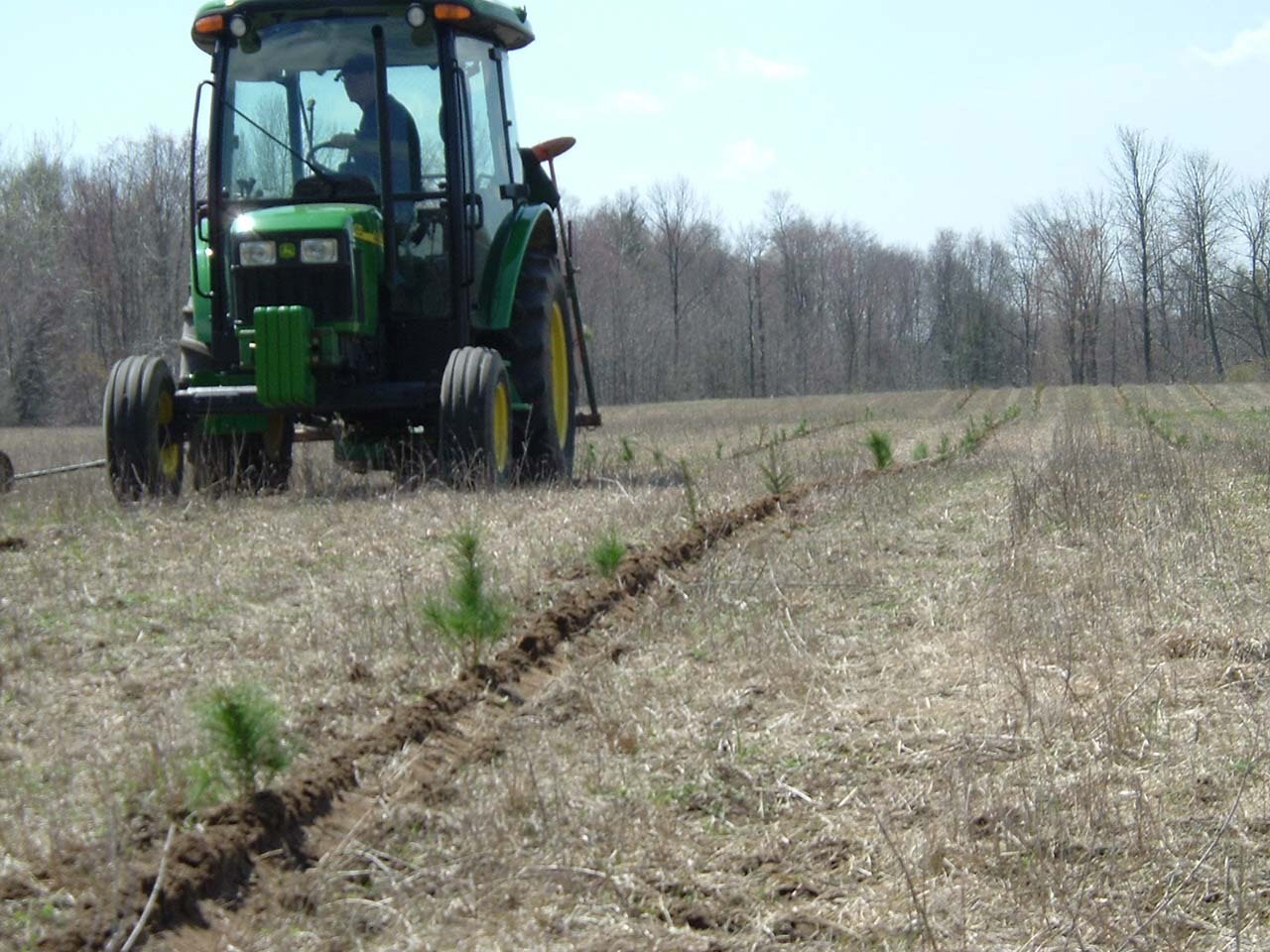
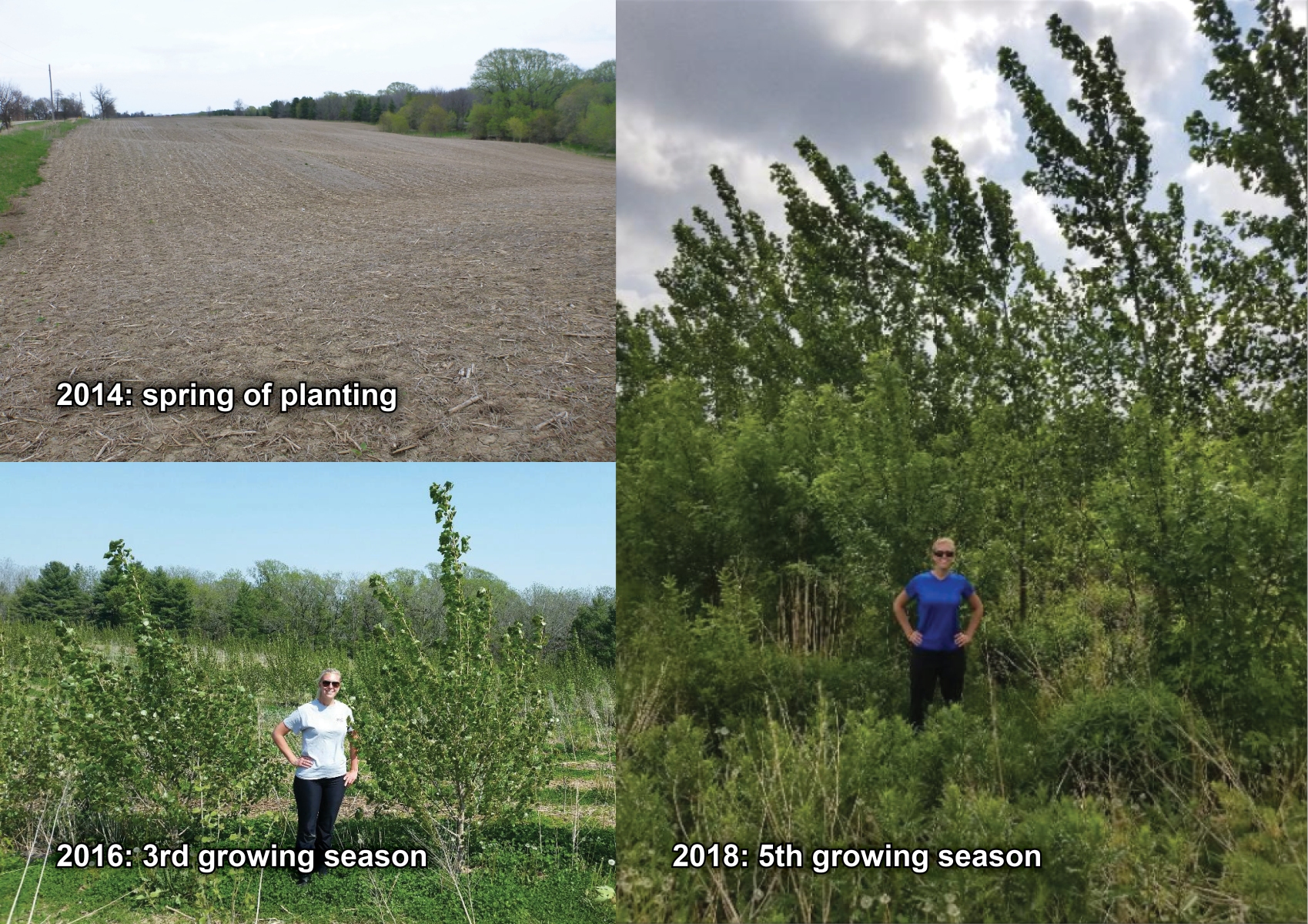
A St. Clair Region Conservation Authority machine-planting crew plants seedlings at a local landowner’s property. The establishment of a forest over five growing seasons between 2014 and 2018.

News & Blog

  • Tyson Lozon (right) is awarded with the A.W. Campbell Memorial Scholarship by St. Clair Region Conservation Authority Chair, Greg Grimes (left).St. Clair Region Conservation Authority Celebrates 2026 Conservation Scholarship Recipients
    July 21, 2026
  • Four people standing beside the Bradshaw Conservation Lands signTTLT and SCRCF Host Recognition Event at Bradshaw Conservation Lands
    June 2, 2026
  • Scholarships Available through the St. Clair Region Conservation Authority
    May 1, 2026
  • A woman standing in a forest with blue tubing attached to treesSCRCA Hosts A.W. Campbell Maple Syrup Festival March 21 – Alvinston Firefighters Association to Hold Pancake Breakfast March 21 and 22
    March 9, 2026
  • Two men standing and shaking handsSt. Clair Region Conservation Authority Celebrates a Year of Environmental Progress at 2026 Annual General Meeting
    February 27, 2026

Regulations

  • Permits
  • Apply for a Permit
  • Drainage Act Project Review
  • Legal Inquiry

About Us

The St. Clair Region Conservation Authority is located in southwestern Ontario and includes the Sydenham River watershed and smaller watersheds draining directly into southern Lake Huron, the St. Clair River, and northeastern Lake St. Clair.

The Conservation Authority implements programs to reduce the risk to life and property from flooding and erosion; water and land stewardship; forestry; wildlife habitat creation and outdoor recreation.

Partner Links

  • Conservation Ontario
  • Thames-Sydenham & Region Source Protection Area
  • Healthy Lake Huron
  • Sydenham River Website
  • Friends of the St. Clair River
  • Forest Gene Conservation Association
  • Lake St. Clair Canadian Watershed Management Plan
  • Ontario Trillium Foundation

Connect with us!

  • St. Clair Region Conservation Authority
  • 205 Mill Pond Cres., Strathroy ON N7G3P9
  • 519-245-3710
  • 519-245-3348
  • stclair@scrca.on.ca

© 2026 · St. Clair Region Conservation Authority

  • Home
  • Accessibility
  • Privacy
  • Director Access
  • Foundation Access
  • WM
Prev Next