

• About
    • Mission / Vision Statement
    • Governance / Board of Directors
    • Board Meeting Packages
    • Area of Jurisdiction
    • Publications/Forms
    • Events
    • Tender Documents
    • Employment Opportunities
    • Accessibility
    • News & Blog
    • SCRCA Staff Directory
    • Service Disruptions
    • Contact Us
  • Permits & Planning
    • Introduction
    • Property Inquiry
    • Map Your Property
    • Regulations Permits
    • Drainage Act Project Review
    • Plan Input and Review
    • Policies and Guidelines
    • Fee Schedule
  • Water Management
    • Flood Notices
    • Flood Notice Types
    • W. Darcy McKeough Floodway
    • Low Water Response
    • Riverbank & Shoreline Protection Development
    • Erosion Control Projects
    • Great Lakes and Connecting Channels
  • Watershed Services
    • Tree Planting / Woodlot Services
    • Environmental Monitoring
    • Habitat Restoration Projects
    • Grants for Landowners
    • Invasive Species
  • Conservation Lands
  • Education
  • Foundation
    • About the SCRCF
    • Donate to our Foundation
    • Planned Giving
    • Memorial Forests
    • Sponsors
    • Land Donations
    • Scholarships
    • Green Meetings
  • Contact Us
St. Clair Region Conservation AuthoritySt. Clair Region Conservation Authority
Flood Status NORMALLow Water Status Level 1
  • About
    • Mission / Vision Statement
    • Governance / Board of Directors
    • Board Meeting Packages
    • Area of Jurisdiction
    • Publications/Forms
    • Events
    • Tender Documents
    • Employment Opportunities
    • Accessibility
    • News & Blog
    • SCRCA Staff Directory
    • Service Disruptions
    • Contact Us
  • Permits & Planning
    • Introduction
    • Property Inquiry
    • Map Your Property
    • Regulations Permits
    • Drainage Act Project Review
    • Plan Input and Review
    • Policies and Guidelines
    • Fee Schedule
  • Water Management
    • Flood Notices
    • Flood Notice Types
    • W. Darcy McKeough Floodway
    • Low Water Response
    • Riverbank & Shoreline Protection Development
    • Erosion Control Projects
    • Great Lakes and Connecting Channels
  • Watershed Services
    • Tree Planting / Woodlot Services
    • Environmental Monitoring
    • Habitat Restoration Projects
    • Grants for Landowners
    • Invasive Species
  • Conservation Lands
  • Education
  • Foundation
    • About the SCRCF
    • Donate to our Foundation
    • Planned Giving
    • Memorial Forests
    • Sponsors
    • Land Donations
    • Scholarships
    • Green Meetings
  • Contact Us

Managing Phosphorus in the Sydenham Watershed

Home News & BlogManaging Phosphorus in the Sydenham Watershed

Managing Phosphorus in the Sydenham Watershed

March 31, 2022

During spring, when the snow melts and there are heavy rains, it is the time of year when the largest amounts of excess phosphorus are washed off the landscape into surrounding ditches, streams, and lakes. Phosphorus is an essential nutrient required by plants and animals. It is found in human and animal waste as well as fertilizers and wastewater effluent. But when it becomes overly abundant in the aquatic environment, it can lead to algal blooms and zones of low oxygen, which threaten wildlife and human health. The excess phosphorus that enters waterbodies this spring—as well as throughout the year—will feed algal blooms later this summer. It is important to reduce the amount of phosphorus that ends up in local waterways and keep it on the landscape where it is needed.

A map of the Sydenham Watershed showing the drainage areas of the two main branches, the North Branch and the East Branch, as well as the St. Clair River Tributaries and Lake St. Clair Tributaries

The Sydenham Watershed is located in the Lake Erie Basin


Nutrient enrichment and excess phosphorus are a particular issue in the Lake Erie basin, which suffers from toxic and nuisance algal blooms each year. The St. Clair Region Conservation Authority (SCRCA) has been working with local stakeholders to develop a phosphorus management plan for the Sydenham River watershed, which is located in the Lake Erie basin. The ultimate goal of the project is to improve local water quality and reduce the impact of this nutrient downstream by identifying local sources of phosphorus, determining best-value solutions, and by engaging the larger watershed community. The plan is set to be released this year and has been undertaken with financial support from Environment and Climate Change Canada and the Ontario Ministry of the Environment, Conservation and Parks.
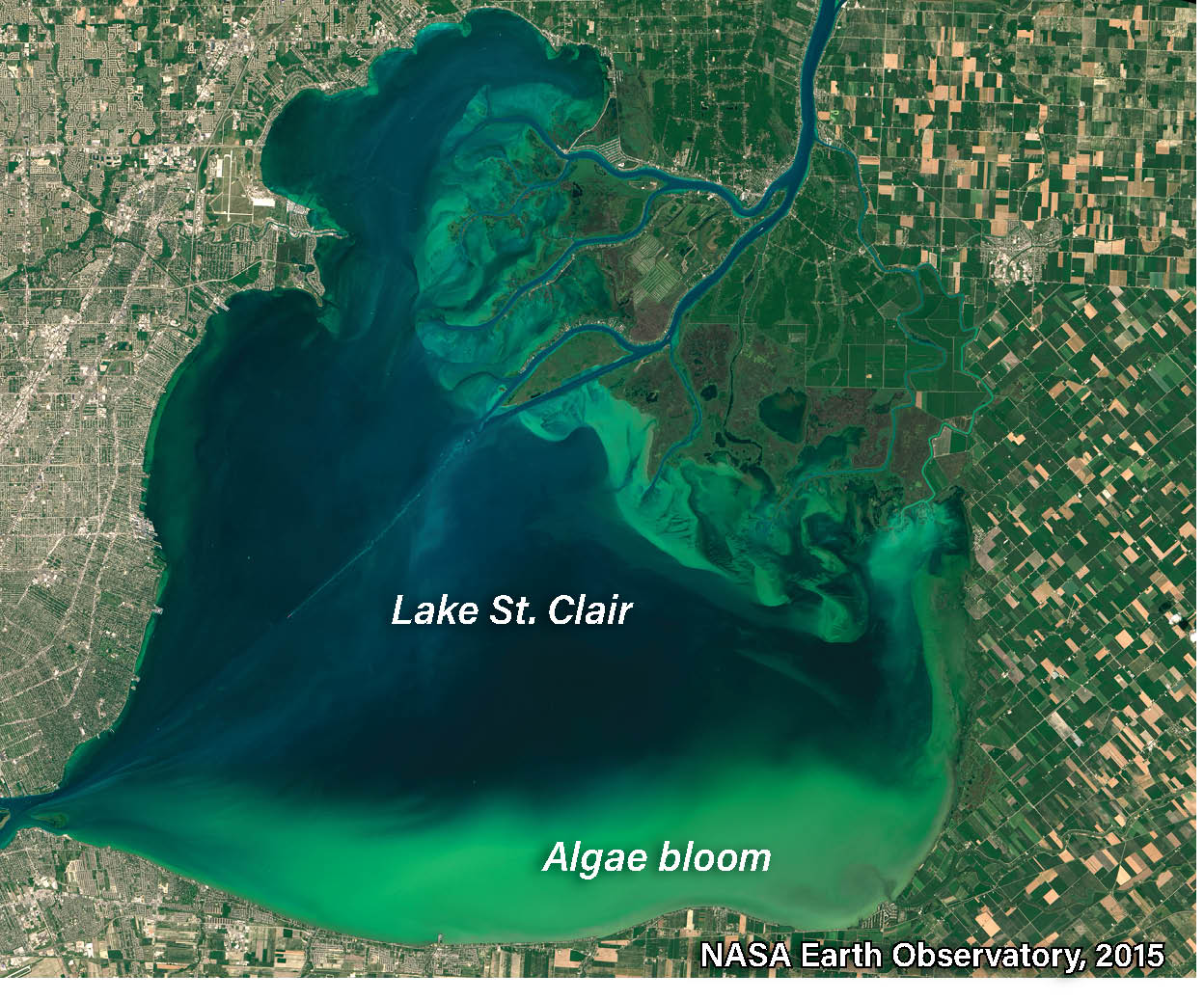
Aerial photo from space of a large green algal bloom on Lake St. Clair. Image by NASA Earth Observatory, 2015

Algae bloom in Lake St. Clair, July 28, 2015 (Photo credit: Joshua Stevens, NASA Earth Observatory)


Here are some things you can do to help reduce the amount of phosphorus that ends up in the water:

  • Phosphorus can build up in the soil, so if you use fertilizers or other nutrient sources, ensure that you are only using the amount needed by the plants and are not over-applying. Also consider when you are applying these nutrients – do not apply to frozen ground or before a heavy rain as it will be washed away.
  • Reduce the amount of pavement and other hard surfaces on your property since they do not allow rainwater to soak into the ground and instead cause more runoff that carries phosphorus and other pollutants to lakes and rivers via storm drains and ditches.
  • To reduce and slow down runoff, consider planting a rain garden, using rain barrels, or establishing vegetation along watercourses.
  • If you have a septic system, ensure it is receiving regular maintenance and doesn’t become clogged. Septic tanks need to be cleaned out when solids fill a third of the tank. Ensure the leaching bed is functioning properly and do not pave or drive over it. Divert excess water away from the leaching bed and ensure downspouts are not connected to the septic tank.
  • Support the conservation and restoration of natural areas like forests and wetlands.
  • If you are a farmer or rural landowner in the region, find out about other beneficial practices and grant opportunities available to you by contacting the SCRCA (or your local conservation authority)


You can learn more about the impact of this nutrient and watch a short presentation on phosphorus in the Sydenham watershed by visiting: www.sydenhamriver.on.ca/phosphorus

News & Blog

  • Tyson Lozon (right) is awarded with the A.W. Campbell Memorial Scholarship by St. Clair Region Conservation Authority Chair, Greg Grimes (left).St. Clair Region Conservation Authority Celebrates 2026 Conservation Scholarship Recipients
    July 21, 2026
  • Four people standing beside the Bradshaw Conservation Lands signTTLT and SCRCF Host Recognition Event at Bradshaw Conservation Lands
    June 2, 2026
  • Scholarships Available through the St. Clair Region Conservation Authority
    May 1, 2026
  • A woman standing in a forest with blue tubing attached to treesSCRCA Hosts A.W. Campbell Maple Syrup Festival March 21 – Alvinston Firefighters Association to Hold Pancake Breakfast March 21 and 22
    March 9, 2026
  • Two men standing and shaking handsSt. Clair Region Conservation Authority Celebrates a Year of Environmental Progress at 2026 Annual General Meeting
    February 27, 2026

Upcoming Events

Ipperwash Beach Cleanup
12 Sep 26
Lambton Shores
17 Sep
SCRCA Board of Directors Meeting
17 Sep 26
Strathroy
St. Clair Conservation Foundation Memorial Forest Dedication
27 Sep 26
Petrolia
  • » View All Events
  • Regulations

    • Permits
    • Apply for a Permit
    • Drainage Act Project Review
    • Legal Inquiry

    About Us

    The St. Clair Region Conservation Authority is located in southwestern Ontario and includes the Sydenham River watershed and smaller watersheds draining directly into southern Lake Huron, the St. Clair River, and northeastern Lake St. Clair.

    The Conservation Authority implements programs to reduce the risk to life and property from flooding and erosion; water and land stewardship; forestry; wildlife habitat creation and outdoor recreation.

    Partner Links

    • Conservation Ontario
    • Thames-Sydenham & Region Source Protection Area
    • Healthy Lake Huron
    • Sydenham River Website
    • St. Clair River Sediment Management Project
    • Friends of the St. Clair River
    • Forest Gene Conservation Association
    • Lake St. Clair Canadian Watershed Management Plan
    • Ontario Trillium Foundation

    Connect with us!

    • St. Clair Region Conservation Authority
    • 205 Mill Pond Cres., Strathroy ON N7G3P9
    • 519-245-3710
    • 519-245-3348
    • stclair@scrca.on.ca

    © 2026 · St. Clair Region Conservation Authority

    • Home
    • Accessibility
    • Privacy
    • Director Access
    • Foundation Access
    • WM
    Prev Next