

Farmers Take the Lead in Protecting Lake Erie’s Future:
A Year of Progress for the Sydenham Phosphorus Reduction Initiative

The St. Clair Region Conservation Authority (SCRCA) is proud to announce a successful first year of the Sydenham Phosphorus Reduction Initiative (SPRI), a program dedicated to protecting water quality in the Sydenham River and, ultimately, Lake Erie. Funded by the Canada Water Agency, SPRI aims to reduce phosphorus loading, a major contributor to toxic algal blooms and declining aquatic health.
Phosphorus enters waterways from many sources, but in rural areas, one of the most persistent challenges is nutrient runoff during rain events, especially across large agricultural landscapes. With over 80% of the St. Clair Region watershed comprised of farmland, the role local farmers have in stewarding these lands is more critical than ever.
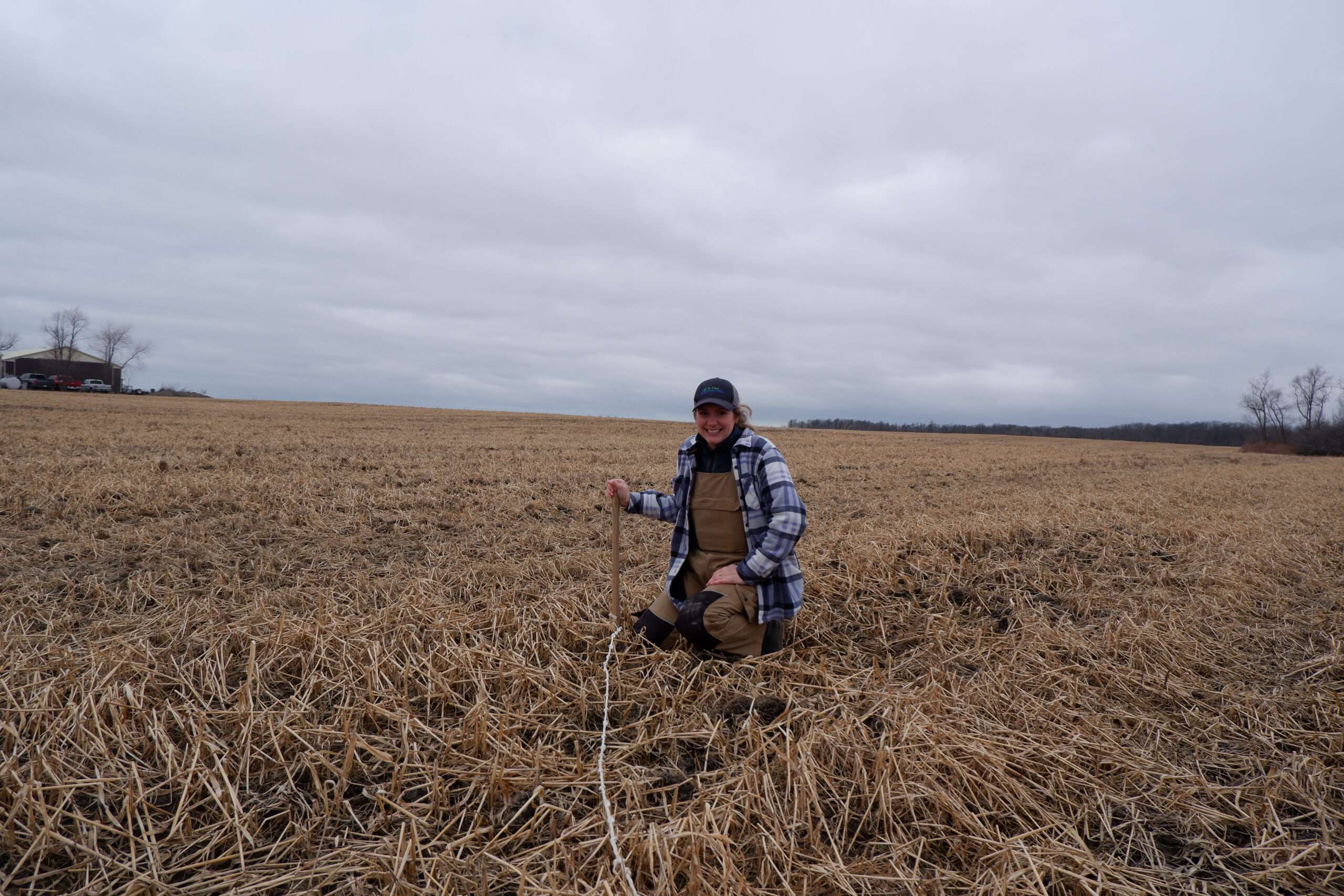
Through funding and educational support, SPRI empowers landowners to adopt or improve agricultural Best Management Practices (BMPs) on their properties. BMPs are proven actions, such as cover cropping, planting windbreaks, or reducing tillage, that not only help retain nutrients on the land and decrease phosphorus losses but also improve soil health, increase crop yields, lower fertilizer requirements, and enhance habitat for aquatic wildlife, including at-risk species. In the Initiative’s first year, the SCRCA partnered with 38 farms to implement over 125 BMPs, ranging from erosion control structures to cover crops, which collectively retained over 2,500 pounds of phosphorus on cropland, preventing it from entering the Sydenham River.
“We have seen firsthand how passionate our farming and rural communities are about protecting the land and water that sustain us all,” shares Jessica Van Zwol, Healthy Watershed Coordinator at SCRCA. “This kind of impact is only possible because of their willingness to adopt practices and actions that benefit everyone downstream.”
To strengthen the science behind the project, the SPRI team also launched three new water quality monitoring sites, with five edge-of-field stations to follow in year two. These will provide a clearer picture of how water and nutrients move across the landscape and where solutions are most effective.
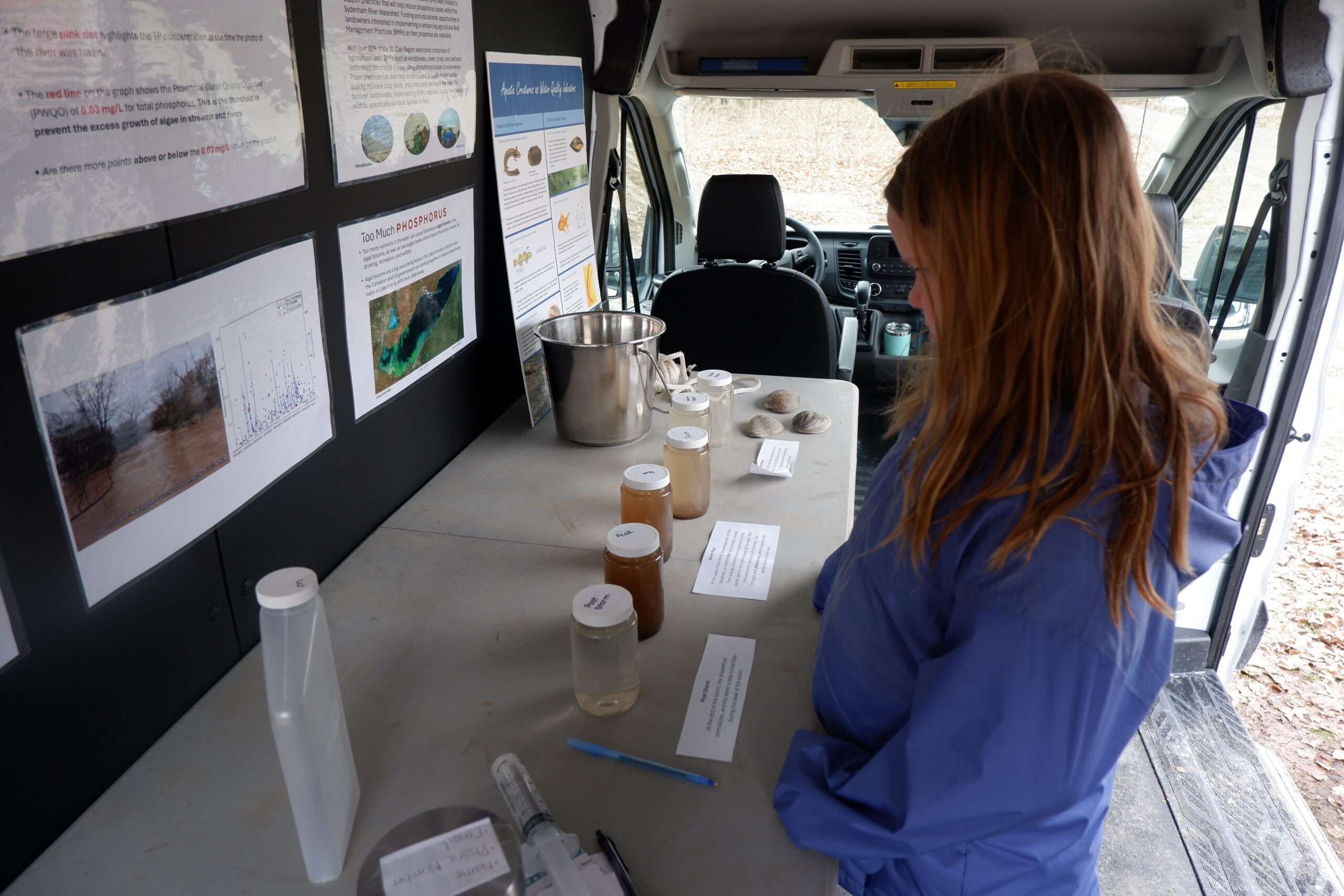
The success of SPRI depends on the local community, from residents in urban areas like Strathroy to the farmers who grow our food. SCRCA also recognizes the need to invest in the next generation of environmental stewards and farmers through an expanded education program. In year one alone, over 1,000 students across 15 schools took part in one of three specialized programs:
- Future Farmers 5-Day Program – An immersive experience for Grades 7–12 covering phosphorus, agriculture, water monitoring, and the future of farming.
- Phosphorus 101 – A cross-curricular challenge for students to explore unique, locally driven solutions to phosphorus pollution.
- Agriculture Specialist High Skills Major (SHSM) Student Conference – Connecting Grade 11 and 12 students with experts in farming, industry, and conservation.
“Helping students connect the dots between soil, water, and food systems is one of the most rewarding parts of this initiative,” says Craig Paterson, Manager of Biology at SCRCA. “They’re not just learning science—they’re seeing how their choices, voices, and ideas matter.”
As SPRI enters its second year, the SCRCA continues to partner with landowners on a range of eligible BMP projects, including:
- Erosion control structures
- Tree planting and restoring natural cover
- Cover crops
- Reduced tillage and nutrient management technologies
- And more
A full list of eligible projects and funding details is available on the website:
www.sydenhamriver.on.ca/stewardship/healthy-watersheds-program/spri
To learn more or apply for funding, contact the SPRI team at [email protected] or call (519) 245-3710 ext. 241.
About the St. Clair Region Conservation Authority
The St. Clair Region Conservation Authority is located in southwestern Ontario and includes the Sydenham River watershed and smaller watersheds draining directly into southern Lake Huron, the St. Clair River, and northeastern Lake St. Clair. The Conservation Authority implements programs to reduce the risk to life and property from flooding and erosion and promote water and land stewardship, forestry, wildlife habitat creation, conservation education, and outdoor recreation. For more information, visit our website at www.scrca.on.ca.
– 30 –
For more information, contact:
Jessica Van Zwol, Healthy Watershed Coordinator
St. Clair Region Conservation Authority
(519) 245-3710 Ext. 241
Craig Paterson, Manager of Biology
St. Clair Region Conservation Authority
(519) 245-3710 Ext. 252